I provide educational testing, psychological testing, neuropsychological evaluation, diagnosis, psychotherapy, and mental health treatment for children, adults, and families.
Mental Health Treatment, Including Psychotherapy
 I work with children, teens, adults, and families experiencing a wide variety of mental health issues, including anxiety, obsessive-compulsive disorder (OCD), fears and phobias, autism, depression, behavior problems, dealing with medical problems or chronic pain, and difficulty coping with life problems.
I use an eclectic mix of therapy styles, depending on the needs of my clients, including Cognitive-Behavioral Therapy, Acceptance and Commitment Therapy, Dialectical Behavior Therapy, and Collaborative and Proactive Solutions (for parent-child struggles). CBT is a practical, active, solution-focused style of therapy which focuses on relieving symptoms by changing thoughts and behaviors. ACT involves finding new ways to relate to negative thoughts and feelings in the service of living a life that matters. DBT offers a set of tools for managing intense emotions and solving interpersonal problems. CPS is a positive and respectful method for parents and children to work together to solve problems related to children’s emotions and behaviors.
I offer individual psychotherapy for children, teens, and adults, but I also often work with parents and children or teens together. For example, when treating a child for anxiety I will also teach the parent strategies to use when anxiety occurs at home.
Full (Comprehensive) Evaluation
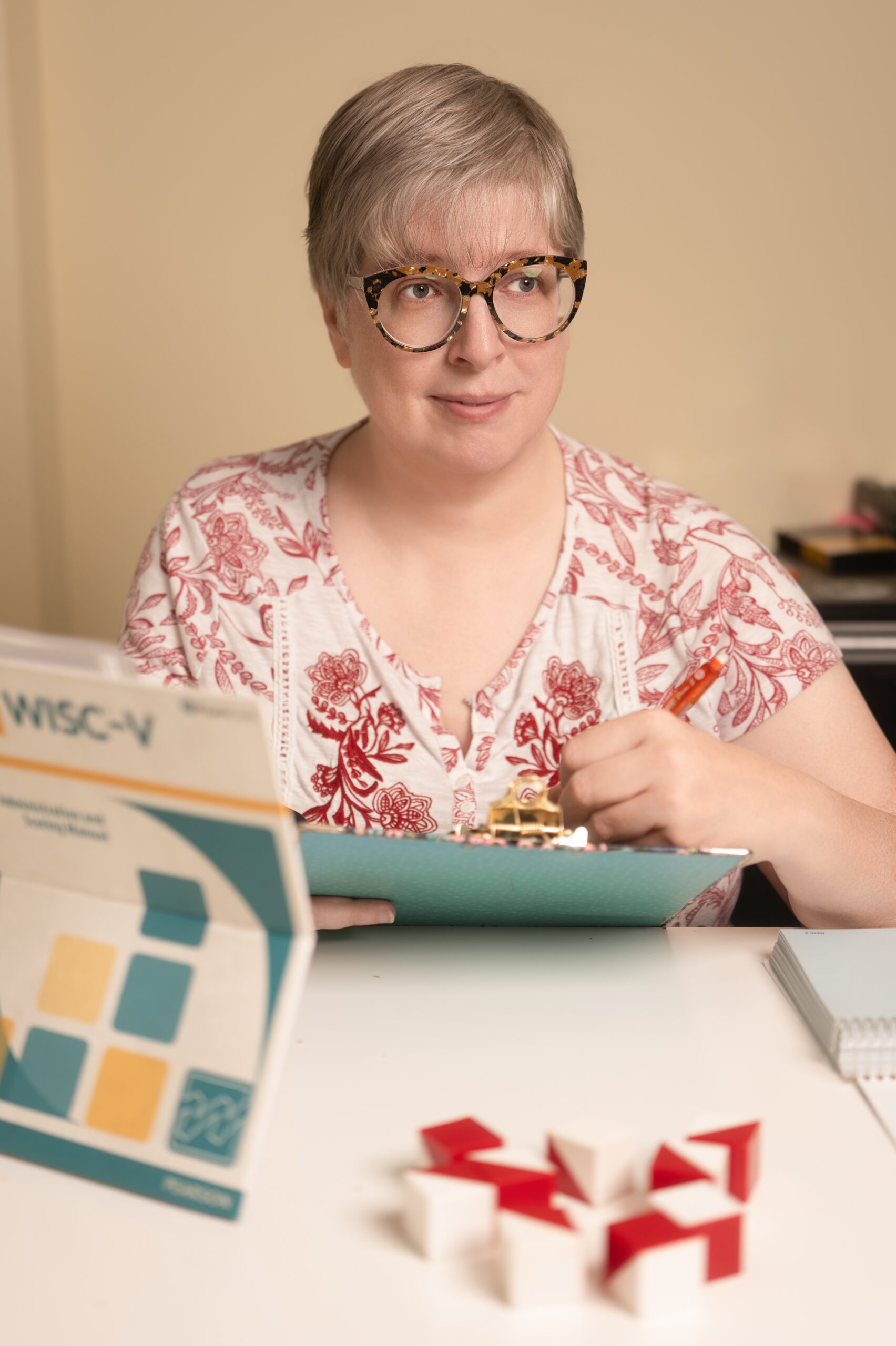 A full evaluation is designed to answer complex questions about a person’s psychological and educational functioning. Full evaluations are appropriate for families who are concerned that their child might have a learning disability, ADHD, autism, or an emotional or psychological issue that significantly affects their learning. Full evaluations are also appropriate for adults who will need formal accommodations for higher education or testing, or who wonder if they have a learning disability.
What it involves: A full evaluation for a child begins with an interview with one or both parents. The child will complete a series of psychological tests. The specific tests used will be chosen based on the presenting problem, but will usually include tests of intellectual ability and academic achievement, as well as specific mental functions (such as attention, memory, or language) related to the problem area. Parents will be asked to fill out some questionnaires about their child. If your child attends school, whenever possible I will do an in-school observation session and talk to the teacher.
A full evaluation for an adult is much the same, although (with your permission) I may seek additional information from a spouse, sibling, or adult child. You will complete questionnaires as well as formal psychological testing. If you have any previous records from your childhood, such as report cards or childhood evaluation reports, I will ask you to provide copies.
In a full evaluation, the series of tests will be divided into at least two separate sessions so as not to cause fatigue. A full evaluation finishes with a face-to-face interpretive session to discuss the results, answer your questions, and outline next steps. You will also receive a full written report, including recommendations customized to your family’s situation and needs. If your child attends school, then with your permission I can also communicate my findings to the school and assist with intervention planning there.
Focused Adult ADHD/Autism Testing
Many adults wonder if autism or ADHD might explain some of their struggles and the ways they feel different from other people around them. They want to understand their brain and their experiences better, but they do not need the kind of comprehensive testing that is necessary to support accommodations in formal settings like high-stakes testing or higher education. This type of evaluation establishes whether a diagnosis is present and provides individualized recommendations.
What it involves: A focused ADHD/autism evaluation begins with a clinical interview. We will need to schedule one in-person visit to my office for testing and a focused diagnostic interview. I will ask you to fill out some questionnaires. If possible, and if you are willing, I will talk to someone who knew you in childhood, like a parent or sibling. I may also have your spouse, sibling, parent, or close friend fill out questionnaires. We’ll finish with an interpretive session to discuss the results, answer your questions, and outline next steps. You will also receive a full written report, including recommendations customized to your situation and needs.
Brief Evaluation
Not every family needs a complex evaluation to answer their questions. A brief evaluation is designed to answer basic questions about a person’s abilities or achievement. For example, a family might wonder whether their child is gifted, or whether the child is performing at grade level in various subjects. An adult may wonder about their cognitive strengths and weaknesses or may want to know if they qualify for programs like Mensa.
What it involves: A brief evaluation is usually completed in a single session. It begins with a short, focused interview and then an IQ test or standardized achievement test. You will receive a full written testing report, with the opportunity to follow up with me in person or by telephone if you wish.
Consultation and Follow-Up
I provide a wide range of consultation and follow-up services. Consultation services are ideal when parents are seeking advice about a behavioral or emotional issue which does not involve a need for extensive testing. Families who are making changes to their homeschooling based on the results of an evaluation may wish to schedule periodic “check-ups” to review their progress and address any problems they are having. If your child has been evaluated elsewhere (for example, in public school), you may wish to seek consultation services to translate classroom-based recommendations into a practical homeschooling plan. Finally, you may wish to seek an initial consultation if you are not sure whether your child needs testing or not.
What it involves: Consultation services are scheduled on an hourly basis. Frequency and content will vary widely depending on the needs and wishes of the family.
There are some services I do not provide.
- I do not provide evaluations or testimony for legal disputes. If you are seeking psychological services related to a legal issue, such as a child custody evaluation, I strongly recommend that you choose a provider who specializes in forensic psychology.
- I do not evaluate children who are younger than five years old, because I don’t have the specialized training and materials necessary for these assessments.
- I do not evaluate older adults for memory loss or possible dementia, because I don’t have the specialized training for these assessments.
- Because Minds in Focus is a part-time solo practice, I am not a good choice for someone who is likely to need especially intensive therapy or emergency services. If our consultation reveals that you or your child needs more services than I can provide, I will assist you in finding a provider who is a better fit.